This is an opinion website which usually discusses violence from the outset. If you are affected by any of the issues discussed in this article, you may find this list of links useful.
This is a long read and so this article has been put into segments:
For Galtung’s Violence Triangle, click here.
Myths about pacifism, click here.
The cost of war, click here.
What is militarism? Click here
Time to read this article:
Did you know the famous theoretical physicist, Albert Einstein, was a pacifist?
“I believe the world has had enough of war,” he once told an American journalist. He continued his quest for peace until his death in 1955.
Peace isn’t just a theory though, it’s a daily practice. But what does pacifism mean?
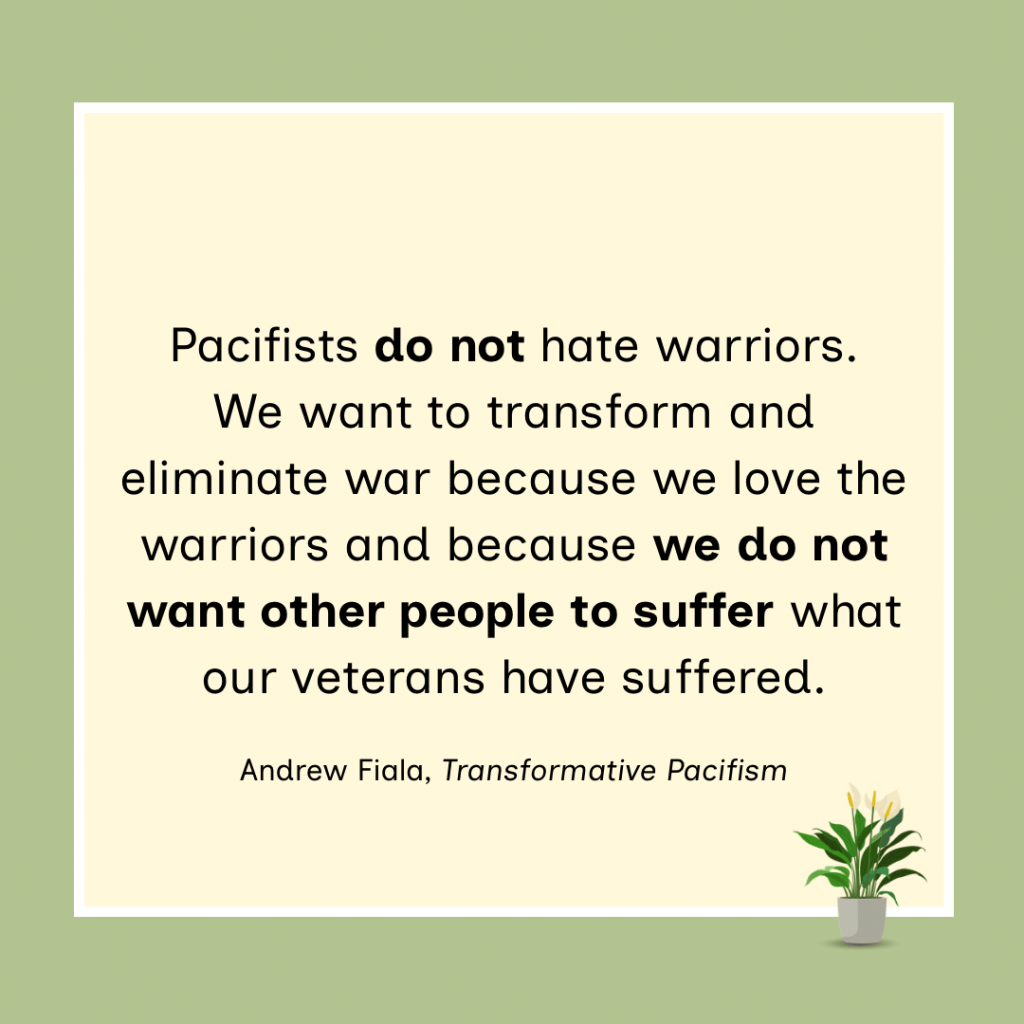
At its most basic, pacifism recognises that harm is a choice, and means rejecting wilful violence towards other humans. That’s whether it appears in the home, at work, on our streets, or among nations.
Pacifism is a coherent and comprehensive moral and social theory. As a moral theory pacifism postulates peace as the highest good. It criticises violence while advocating non-violent action. It outlines a way of life that is oriented around pacific virtues such as tolerance, mercy, forgiveness, kindness, generosity, love and the pursuit of inner peace. – Andrew Fiala, Transformative Pacifism
The Violence Triangle
Before we explore pacifism in more detail, it can help to understand violence and the forms it takes.
Sociologist Johan Galtung, known as the “father” of peace studies, spoke of violence as a triangle, with three different sides: direct, structural and cultural.
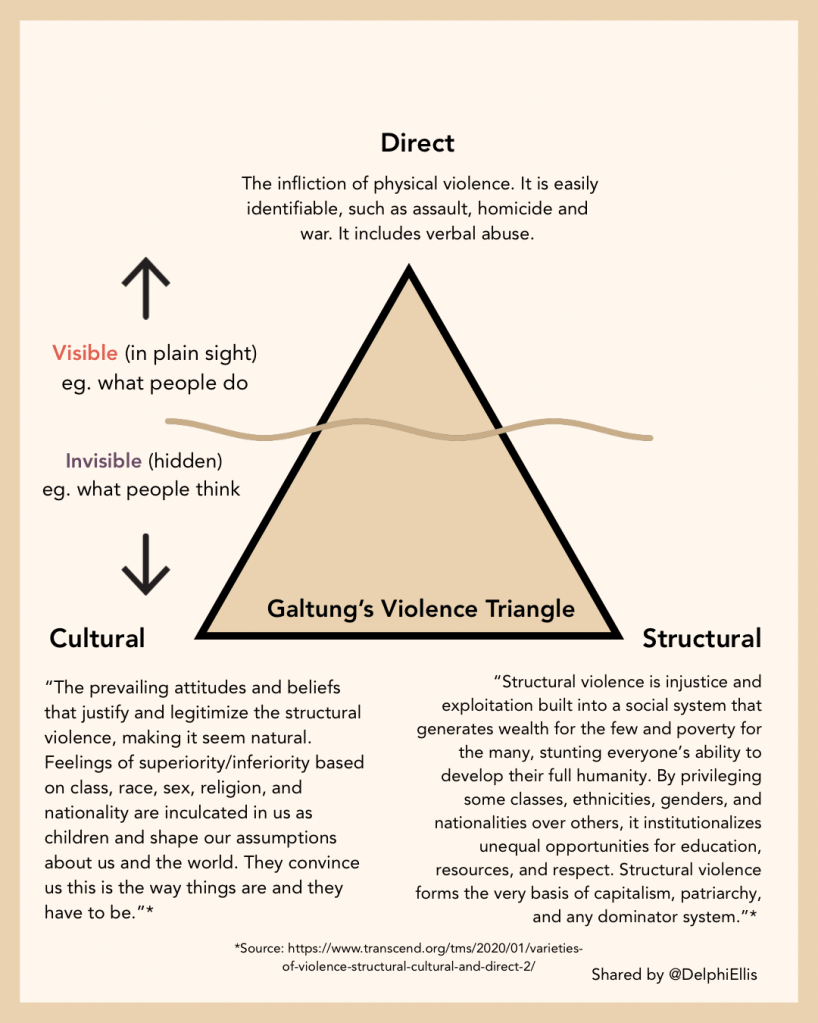
Direct violence is harm which is usually visible, and includes physical violence such as assault and verbal abuse. It incorporates torture, terrorism, homicide and war.
Cultural violence includes attitudes, beliefs and assumptions that can influence direct violence – not in the sense that it’s only seen in certain communities, but potentially violence that’s been normalised, even accepted, in wider society. It is often invisible, because it rests in what people think, like the opinions they have about certain groups. Here, violence is (wrongly) thought of as “natural” and “this is the way things are and how they have to be”.
Beliefs that form part of cultural violence may include dangerous notions of superiority/inferiority, as in the case of racism, homophobia, ableism and misogyny, where it is rooted in the ideology of supremacy. It becomes visible when it leads to direct violence such as physical assault, though it can include comments that target looks, intelligence, strength and imply someone is “less than” or even just different.
Allport’s Scale of Prejudice highlights that violence starts long before we think it does, often because of such harmful words, and vocalised beliefs.
Structural violence is the injustice, discrimination and exploitation that can show up in a system, but may be described or disguised (ie. invisible) as “policy”. It can be the scaffolding that holds up and sustains oppressive narratives, even if unwittingly. Remember, in this context violence doesn’t have to be physical, it can be the psychological harm caused by a structure that enables harm doing. This can include practices which reinforce prejudice and discrimination.
Workplace directives, such as absence procedures which adversely affect or harm people with disabilities and/or those with children are one example. It would also include dress code policies that monitor, oppress and punish women for what they wear, and the type of sexist thinking that reinforces the gender pay gap.
Structural violence could also include the impact of stigma and stereotypes created by certain assumptions, bias or prejudice (cultural violence) which affects certain groups, and then shows up in decision making. Consider how workplaces may make recruitment or disciplinary decisions as a result of that stigma, or how exclusionary welfare decisions may be made about people with mental illness, who are often wrongly assumed to be “swinging the lead”, or lumped in with people who are violent, even though they are actually more likely to be victims of crime.
Structural violence can benefit people who have money while disadvantaging those with low-income. One example is how the system will allow some people to access counselling in a timely fashion because they can afford it, whereas others may have to go on long waiting lists which may add more harm.
Patriarchal and supremacist (cultural) views about people from certain demographics can lead to direct violence and sit within structural “norms”, especially where policy is made around those beliefs. Identity violence, which sits across all three sides of the triangle, is particularly insidious because it can include racism, homophobia and misogyny, which can be ongoing and relentless and show up in a variety of ways.
Medical misogyny is one example of how the system can adversely impact women’s health.
Another is where dominance-based narratives single out a certain demographic as “the problem” which might lead to prejudiced immigration decisions or policy for example, which adversely affect the very people seeking help. Riots associated with opposition to immigration, as a result of harmful assumptions (cultural) reinforced by media rhetoric (structural) about those asking for refuge, demonstrate how this can turn to direct violence, and we can see how it’s all connected. (See also section on “Protection and Oppression” below).
Structural violence ultimately privileges certain groups of people. This in turn creates inequalities, impacting the wellbeing of those most affected, and can result in long-term injustice. And because it becomes so normalised (for example, showing up as “policy”) it can even seek to “legitimise” certain types of harm; consider the atrocities of WWII done under the banner of “just following orders”.
By understanding these different types of violence, we can begin to see how parts of society may unwittingly perpetuate and even participate in harmful narratives and beliefs that endorse or enable it. When we acknowledge how direct, structural and cultural violence interconnect, we can take healthy and meaningful steps to resist it, by challenging assumptions, attitudes and beliefs that lead to harm.
We can close the peace gap.
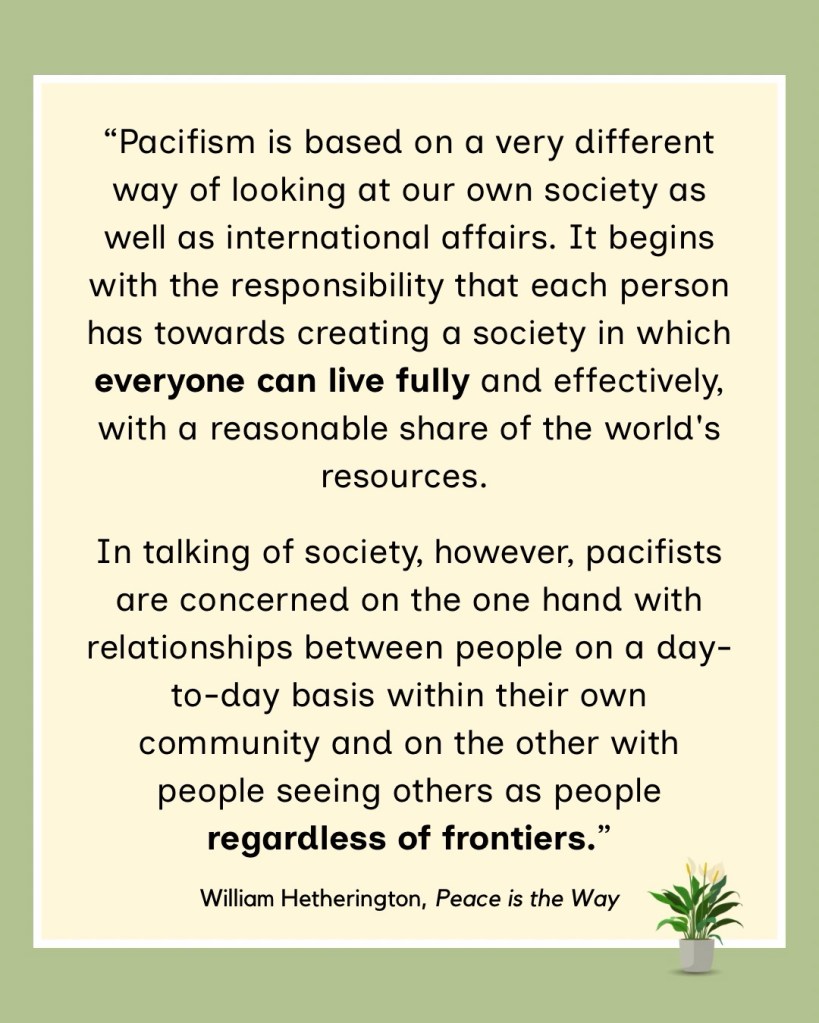
Types of Pacifism and Nonviolence
People hold different ideas about what living peacefully “should” look like. There are also several types of pacifism, from “contingent pacifism” to “political pacifism”. A few have been outlined below.
Absolute pacifism holds the idea that all violence towards humans, and potentially all forms of life including animals, is wrong.
Conditional pacifism however, allows that sometimes it might be ok, though acknowledges that violence generally does more harm than it prevents. This may include proponents of “Just War Theory” and pacifists who hold more militant views that might (ironically) believe peace can only be achieved by some sort of force.
Others are careful to say that simply the absence of violence is not enough, if it doesn’t include justice – especially when people have been forced into compliance, or continue to live in the hum of threat; this is not true peace. Dr Martin Luther King, Jr referred to this as “negative peace”. This aligns with Professor Andrew Fiala’s discussion of Transformative pacifism, which asks us to interrogate the ways that harms (such as misogyny and racism) intersect and explore “impediments to peace, as well as the interconnected sets of concepts, practices, and institutions that are related to peace (and its absence)”.
Some people may wonder where topics like abortion sit under pacifism; the answer will depend very much on where the pacifist sits within any of these definitions (and others). It is worth pointing out though, that recent research has suggested those who are against abortion may also be for the death penalty….which could make us question how much of their stance is about being “pro-life” and how much of it is really about controlling women’s bodies.
This website approaches pacifism from a spiritual, feminist and evidence-based framework, promoting choice, consent and bodily autonomy – and so is pro-choice. This also means it is against conscription (see also point #6 around Myths of Pacifism below); where people are pushed or forced in to war without their willing consent.
Nonviolence and pacifism are terms that are sometimes used interchangeably (as they are on this website) though this is not the same as nonviolent resistance or “civil disobedience”, which can sometimes sail a little close to the edge of the law. Some say that not all who promote nonviolence are pacifists (not everyone is anti-militarism, for example – see section on this further down) but all pacifists generally endorse nonviolence.
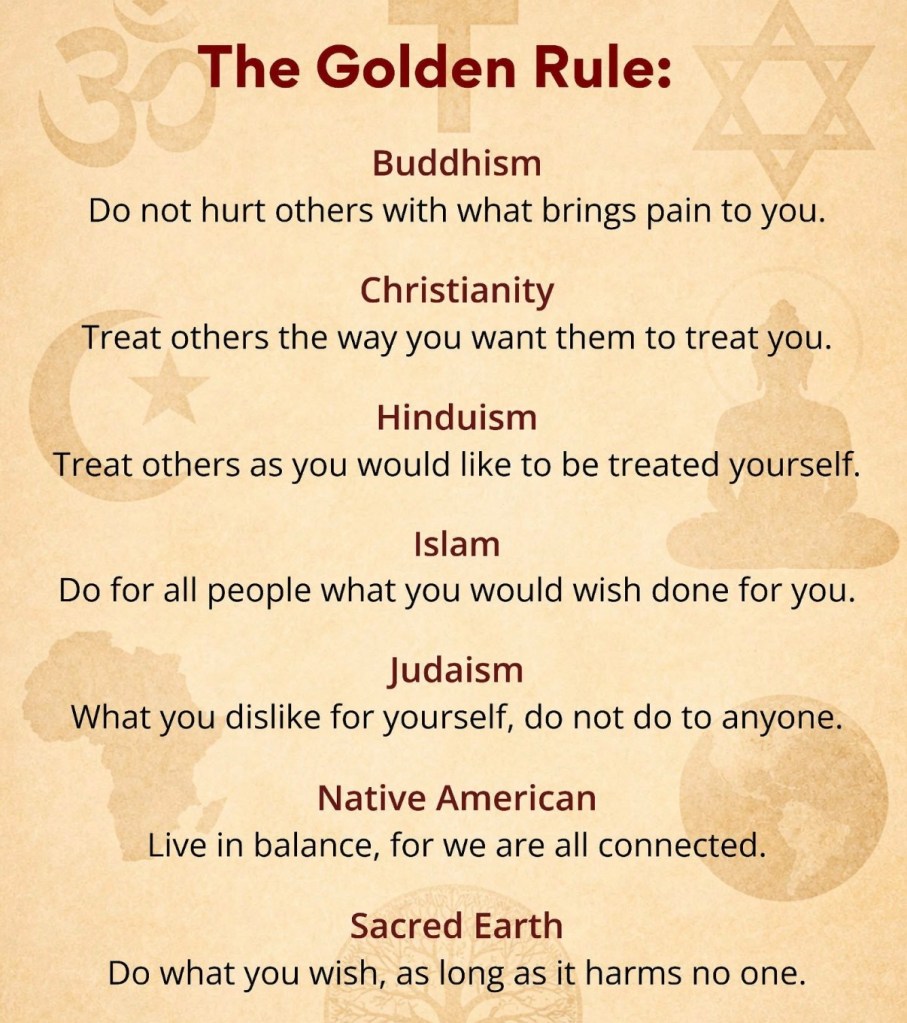
When pacifism includes feminist theory and spiritual thinking (as it does on this website), it also interrogates systems of power (see section on Feminism further down), and how people can be exploited through their beliefs, or where those beliefs are cited to “justify punishment” of others. Whether or not pacifists describe themselves as religious or see themselves as spiritual, they generally promote The Golden Rule of “Do No Harm”, seen across multiple faith traditions.
Feminism and Pacifism
Feminist thinkers can also be pacifists, like the Women’s International League for Peace and Freedom (WILPF). There are also several authors, like Cynthia Enloe, who have tackled the subject of war and peace from a feminist lens. They will often raise awareness of patriarchal systems of power and how violence has become so normalised that society sees it as inevitable (when it’s not). Cynthia Cockburn highlights this in the Continuum of Violence (how some men may choose violence with or without war), as well as Patricia Hill Collins’ Matrix of Domination, which sits alongside Galtung’s Violence Triangle (pictured above), and explains how harms like racism intersect.
The ecofeminist Starhawk also speaks of power from a spiritual lens and as having three different strands. She described power-over (seen in dominance-based structures), power-with (as in with community), and power-from-within, where there is a focus on self-improvement (and personal development). This makes the case that power is not always “bad”, it’s how we use it.
Power-over is linked to domination and control; power-from-within is linked to the mysteries that awaken our deepest abilities and potential. Power-with is social power, the influence we wield among equals. – Starhawk, Truth or Dare
Above all, pacifism and nonviolence are usually concerned with community wellbeing – King spoke of the “beloved community” – and Andrew Fiala said it is the “pursuit of the highest good”, offering “a comprehensive vision of human flourishing”. Pacifist education and nonviolent communication are seen as an important moral strategy.
Myths about Pacifism – What pacifism is not
1. Pacifism is not passive: Pacifism is often confused with passivity, as if pacifists simply choose to do nothing. This is not the case. Many people who stand up conscientiously against war and violence are very active, through campaigns and commentary, whether in person, blogs or on social media.
2. Pacifism is not laziness, it’s actually a daily practice; a commitment to putting more calm and peace into the world, and rejecting hate and harm. This takes energy and requires a fundamental shift in our thinking, away from the normalisation – and desensitisation of – violence.
3. Pacifism is not cowardice: There was a time (and some still hold the view) that those arguing against violence, especially in times of war, are simply cowards. Yet it’s incredibly brave – and sometimes dangerous – to challenge the use of violence. Both Dr Martin Luther King, Jr and Gandhi, who promoted peace and nonviolent principles, were assassinated.
It doesn’t take much courage to be violent. It is ultimately the courageous man who is nonviolent. – Dr. Martin Luther King, Jr.
Pacifism is seen as legitimate expression of care for our global community; even the Imperial War Museum has a page dedicated to conscientious objectors to war, including a testimony explaining that “evil cannot overcome evil”.
4. Pacifism is not ignorance: People who choose peace and reject hate and harm, generally have deeply held moral values, including harmony and justice. They may come from any community, and they are alive to privilege and inequality. They are not “utopian fantasists” (see point #5) and, far from being ignorant to power, pacifists are acutely aware of it (see also note on feminist pacifism above). Pacifists have also probably spent much time and energy researching pacifist ideas (as this website has), before opening up about them.
5. Pacifism is not unrealistic: By the nature of what they talk about, pacifists are actually realists, especially about war and misplaced nostalgia, which often positions wartime – and particularly life under authoritarianism – as if that was “the good old days”. In reality, wartime could be chaotic, terrifying and, of course, often deadly.
This means pacifists tend to say it like it is. For example, they will highlight the reality that in WWII food was rationed from January 1940 until the 1950s and, globally, more people died during the war of starvation, than from military action. Why would anyone want those days back?
Far from being an unrealistic utopia, pacifist living is already promoted in some parts of the world, such as in Japan* described in the Global Peace Index as one of the most peaceful places in the world, and Iceland (which currently has no standing army) cited in the World Happiness Report as one of the happiest. *It’s worth noting that Japan’s post-war pacifism was directly shaped by the atomic bombings of Hiroshima and Nagasaki. As a further point of interest, Okinawa is one of only five blue zones where people regularly live to 100.
6. Pacifism is not disrespect: Being anti-war and anti-militarism is about rejecting violence and domination, as if these are the only means to solve a problem. It is not being disrespectful to those who are currently serving, or who gave their lives in service to their country – it actually speaks in defence of them. The reasons people “do their duty” or serve “King and country” are honourable, especially where those roles predominantly focus on peace keeping. But we must also remember those who were conscripted and from such a young age, regardless of how they felt about war. Some people argue that the military teaches “discipline” – the UK is currently the only country in Europe to recruit children as young as 16 years old – but there are other, less potentially damaging ways of shaping the moral compass of a child. Critics actually say that the high drop-out rate among under-18 army recruits makes it a poor means of tackling youth unemployment.
Remembrance services are also an act of pacifism, because they are a reminder of war and the need to resist it. People must remember that heroes died so that war and violence in the face of oppression would cease; their deaths must stand for something.
To remember is to keep confronting what it costs and what it takes to prevent it from happening again. – Unite Nations Institute for Disarmament Research
It would be much more disrespectful to spout the same hateful, divisive rhetoric as the oppressors of WWII did, while claiming to support the military personnel who died in efforts to defeat them. Lest we forget.
Pacifism does raise questions, particularly about leadership decisions, recruitment campaigns or “family fun days” that might glorify violence or target certain groups.
Pacifists will also challenge any narratives that seek to “justify” violence (as this website does) as “natural”, whether that’s harm in the home, on our streets or among nations.
The 1986 Seville Statement on Violence – drafted by 20 scientists across biology, psychology, neurophysiology and anthropology – declared it scientifically incorrect to say humans have inherited violent behaviour from animal ancestors, that war is genetically programmed, or that humans have a “violent brain.” This assertion still holds water today: just because humans have the capacity for violence, doesn’t mean they have a compulsion for it. If violence isn’t hardwired, it isn’t inevitable – and what isn’t inevitable, must be a choice.
In essence, pacifism challenges the idea that wilful violence and oppression can ever be “just”, especially when those harmed are disproportionately women and children (see below). Pacifists might ask, then, in the face of all this evidence, how we ever became so desensitised to violence – that society still feels an inevitability for it – or an apathy to prevent or end it.
In any event, it feels important to interrogate any narrative that implies peace is the problem, but war and violence are not.
Protection and Oppression
In Galtung’s Violence Triangle (above), we can see that dominance-based narratives are so interwoven into societal culture, that some may believe that war and violence are “just how things have to be”, and the only way to achieve change. However, history shows us that’s not the case. Both Gandhi and King are examples of those who opposed violence and yet created a new and vibrant movement of hope – King’s “beloved community” – during their lifetimes.
But does the evidence show that violence is really the answer to, and protection from, wider oppression? The short answer is: actually, no.
Research by Erica Chenoweth suggests that nonviolent civil resistance is far more successful in creating broad-based change than violent campaigns.
“Peace” therefore that’s achieved through force does not necessarily equate to “protection” or “security”, especially if it’s only temporary.
What about Safety?
If some are justifying war and violent conflict in the name of safety, it’s first reasonable to ask: safety for whom?
Figures show that “…in 2023, 4 out of every 10 civilians killed in conflicts were women, and 3 out of 10 were children.”. Records also show that two thirds of women in the UK military report bullying and sexual abuse; the harm done to women and young girls serving, is now well documented.
Investigations in to those who claimed to be “patriots” and “defending their country”, yet took part in riots in the UK under the banner of “protecting women”, showed that 2 in 5 had previously been reported for domestic abuse, and 1 in 5 has been reported since.
The intentional killing of 50,000 women globally, usually by their intimate (male) partner highlights the prevalence of male violence, and this is before we get to rape and sexual assault perpetrated by violent men, with or without war. UN Women explain: “In wars around the world, rape and other forms of gender-based violence are used to terrorise civilians, punish communities, force displacement, and assert control”.
This also doesn’t include the impact that violence and conflict have on women’s health, especially for pregnant women and babies (incidentally, the state of UK maternity services is under the spotlight), while aid is continuously stretched due to lack of funding. This is despite billions being plunged into military spending (see Legitimacy and Cost below).
In the US, a woman is most likely to die in pregnancy at the hands of her violent partner. In the UK, where at least one woman is murdered each week – and most often by a man – every domestic homicide costs £2.2million.
If going to war (be it at home or abroad) is about safety and “protection”, that doesn’t appear to include women and children.
Real security is collective wellbeing. – Dr Kopano Ratele
Defence (as protection) to achieve safety should also not be confused with violent military aggression. One example of reasonable defence might be the interception of messages, gaining intelligence and operations that thwart the oppressor, without necessarily using force. A brilliant example of this could be during the Second World War, where important documentation was intercepted and translated at Bletchley Park, and where Operation Fortitude was a ruse to confuse, that even had King George VI involved.
Legitimacy and Cost
Questions have been asked about the legitimacy of sending military troops – often husbands, brothers and sons* – in to conflict zones where doubts have been raised about legality, even as recently as 2026. (*88% of the UK military are men, 82% in the US).
For example, human rights experts commissioned by the United Nations (UN) have concluded that there are “reasonable grounds” to believe that the US committed a war crime when it struck a school in Iran.
We must also consider the cost of war and violence, both in human lives and military spending, and how the wellbeing of the global population could be improved, and money might reasonably be diverted, from a pacifist and anti-militarist lens. Let’s take a look.
How many have been harmed?
The total number of military and civilian casualties during WWI is estimated to be 15-22 million deaths – 9 to 11 million military personnel and about 6 to 13 million civilians – with an additional 21 million wounded military personnel.
There were three times as many British forces died on the first day of the Battle of the Somme (19,240) than have been killed in every combat operation since the end of WWII. Had the Prime Minister read out their names in the House of Commons, as has been done since 2003, it would have taken at least 11 hours.**
In WWII there were 384,000 soldiers killed in combat, and a higher civilian death toll (70,000, as opposed to 2,000 in WWI), largely attributed to German bombing raids during the Blitz: 40,000 civilians died in the seven-month period between September 1940 and May 1941, almost half of them in London**. [**Source: UK Parliament].
It’s also worth highlighting that the harm didn’t just happen as a result of combat. An estimated additional 19 to 28 million people died from war-related diseases and malnutrition/famine as a result of World War II, and that is, in significant part, attributed to the oppressor’s direct strategic tactic known as “The Hunger Plan“.
Demographers and historians typically suggest that there were 70 to 85 million total deaths of World War II.
In the Falklands Conflict, 255 UK Armed Forces personnel died during the 1982 campaign, plus another 95 veterans’ death was recorded as suicide (some argue there were way more than this). Since then, official records document more than 2,000 British military fatalities from operations in Northern Ireland, Iraq, and Afghanistan over the past forty years. When accounting for broader in-service and veteran mortality, the total rises by thousands more – figures that underscore the human cost of conflicts that frequently drew intense political and legal scrutiny.
For the 20-year period 1999-2018, it was recorded that there were 310 suicides in the UK Regular Armed Forces. (A further 19 deaths were referred to a coroner (or for Scotland, the Procurator Fiscal) where the mechanism of injury indicated possible suicide, which may be returned as suicide). 292 of these suicides were men, 18 were women.
This is before we get to the horrors in other parts and the world, including Hiroshima or Nagasaki, and the cost of atomic weapons.
May they all rest in peace.
Military Spending
In 2025 alone, the UK was the sixth highest military spender globally (only the U.S., China, Russia, Germany and India spent more than the UK).
Global military spending hit $2.9trillion in 2025 – that’s $92,000 a second – according to the Stockholm International Peace Research Institute, and is projected to reach $6.6trillion if current trends persist.
According to Scientists for Global Responsibility, the latest UK military spending figures show an annual figure of £60.2billion with a planned rise to £67.7billion by 2029.
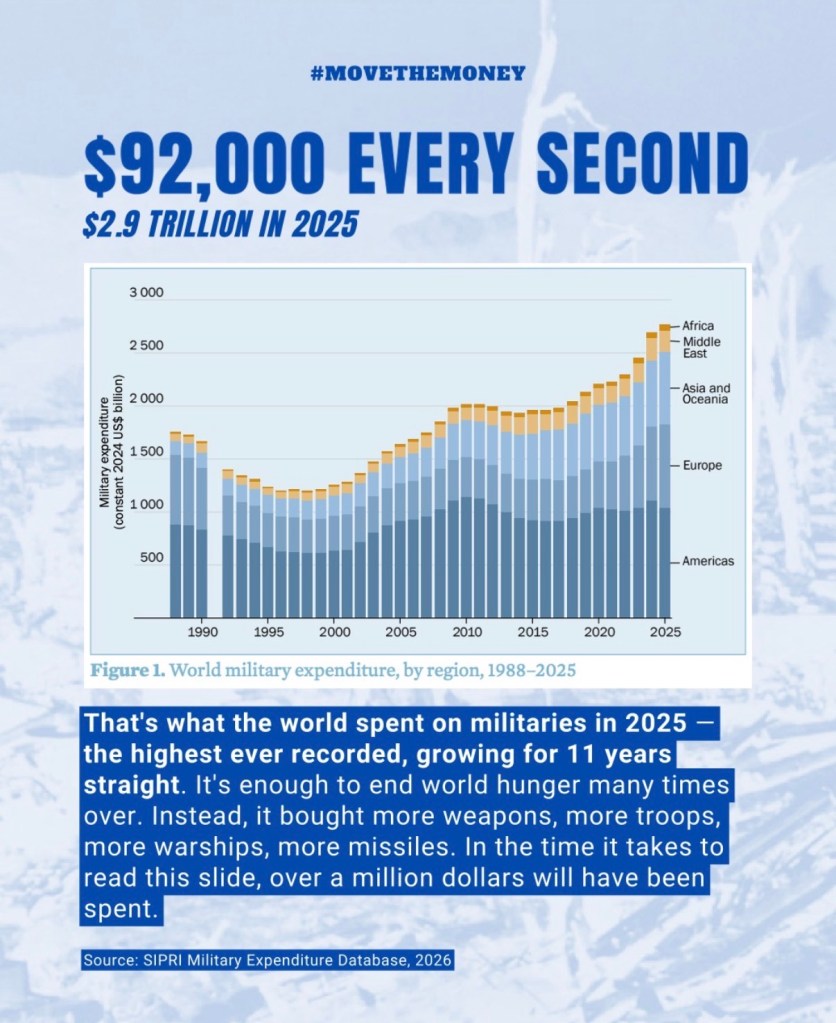
This is before we calculate what it costs to rebuild national infrastructure after war, or the impact on an already present cost of living crisis, exacerbated by recent conflict. Families are displaced by conflict. Women and children lose access to healthcare and education.
But militarism seems to prioritise spending on armaments (for example) over things like community and individual welfare (see What is Militarism? below).
So it’s worth mentioning that a significant threat to national security currently, at least in the UK and according to various reports including Britain Under Strain, is the slow erosion of social cohesion – not just the threat of war from a “foreign” invader.
It seems fair to say, then, at least some of this money might be better spent on peace education and intervention (like skills of Upstandership), along with alternatives to militarism that seek to build community wellbeing and cohesion, while reducing hate and harm locally, nationally and internationally. Violence is not the answer. When we put peace into the world, the world will bring us peace.
This would mean having to address the mindset of greed, entitlement and supremacy behind male violence, whether that’s causing domestic abuse, voyeurism, knife crime or modern slavery – which also affects men. This requires an anti-militarist approach.
What is militarism?
Militarism is the authoritarian belief (and practice) that perpetuates the myth that war and violence are “natural”.
It can be expressed through narrow ideas of masculinity – sometimes referred to as militarised masculinity – and promotes values like obedience (especially to hierarchy), “toughness”, and readiness for violence – whether a country is at war or not.
Militarism isn’t just about “having an army” – it’s the ideological process by which military values and ultimately violence are treated as normal, necessary, and admirable across a whole society (not just within the armed forces).
Hegemonic masculinity is the mechanism that makes this ideology feel natural to individual men, because it recruits their sense of identity and worth into it.
Definitions of militarist masculinity, across feminist literature include:
- Violence reframed as protective duty rather than harm
- Emotional suppression cast as “discipline” and control
- Hierarchy and obedience valorised as strength, not submission
- Women and other civilians positioned as those requiring protection – reinforcing a protector/protected binary that depends on female vulnerability
- The nation or “in-group” as an extension of the masculine self, worth defending through force.
Now consider this alongside any form of male violence that is about territory or (a harmful sense of) ownership, from gang violence to domestic abuse..
It’s important to remember the narrative, not just the need or network so often cited to “justify” men’s violence or how men end up in the man0sphere. Men who align with this ideology, centred on domination and control (rather than learning or connection) will naturally be drawn to people who say “here’s how you get your power back”. Women will never be safe in this paradigm, though ultimately neither will anyone else.
The King Centre defines militarism as: “war, imperialism, domestic violence, rape, terrorism, human trafficking, media violence, drugs, child abuse, violent crime…”
Military logic can shape culture and politics, especially where media channels endorse it (and by extension may make excuses for male violence). It can also affect the economy where jobs are tied only to the prospect of war, which becomes mutually reinforcing: job security is reliant on conflict, and vice versa. (See Alternatives to Militarism below.).
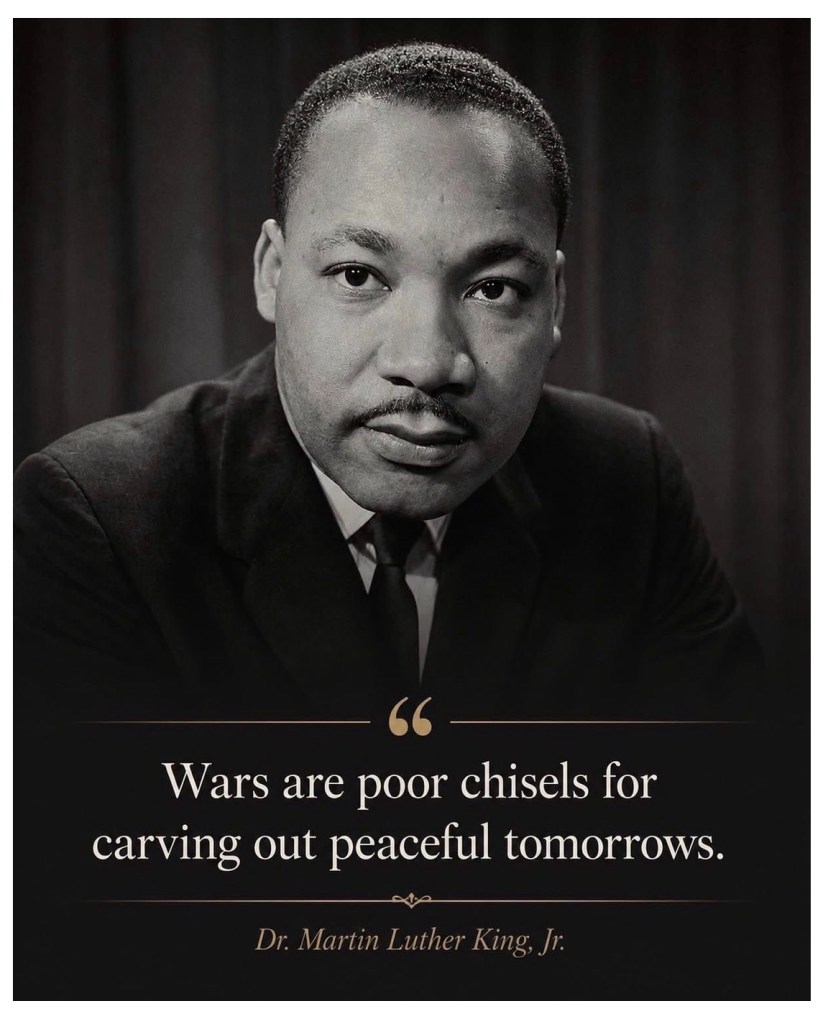
“A true revolution of values will lay hands on the world order and say of war – ‘This way of settling differences is not just.’ This way of burning human beings with napalm, of filling our nation’s homes with orphans and widows, of injecting poisonous drugs of hate into the veins of peoples normally humane, of sending men home from dark and bloody battlefields physically handicapped psychologically deranged, cannot be reconciled with wisdom, justice and love. A nation that continues year after year to spend more money on military defense than on programs of social uplift is approaching spiritual death.”
Source: “Where Do We Go From Here: Chaos or Community?” by Dr. Martin Luther King, Jr.; Boston: Beacon Press, 1967. Taken from The King Centre website
To be clear, anti-militarism is not anti-military. Opposing militarism doesn’t mean that there isn’t a place for defence (of course there is), it just challenges the ideology that violence is the only “reasonable” answer.
There are many cited “causes” for war which centre harmful ideology like who has control of something – whether it’s people, land or materials, like fuel. (They may also include security-seeking and nationalism). So it’s worth noting that male violence tends to centre greed, entitlement and ownership of something, whether it’s over women, territory or resources.
As alluded to above, a significant, under-examined factor is how knife crime and “gang violence” and domestic abuse are all predominantly perpetrated by men, and may have a similar, harmful ideology. While differently affecting men and women respectively and may have other influencing factors (poverty is often stated even though wealthy men commit domestic abuse), this violence could be understood through the militarist lens of domination, power and control.
What this does demonstrate though is that war and violence are not inevitable. Normalise peace, reject the mindset, embrace meaningful change.
Alternatives to militarism
People understandably worry about a number of things when hearing anti-militarist ideas, defence of course being one (also discussed above). But it’s now well established that increasing armaments actually heightens the chances of other nations doing the same – that’s why it’s called The Arms “Race”.
“The signs are that a new arms race is gearing up that carries much more risk and uncertainty than the last one (Source: SIPRI).”
Another anxiety people have is what will happen to all the industries – and jobs – tied to militarism, from weapons making to the production of military uniforms.
Is it a fair point? Yes, Is it possible to argue against it? Also, yes. Here’s just three reasons why:
- Armament is a boom-bust cycle. Think about post 1945, where women were sent “back to the home” and even men in the military had to secure employment elsewhere / were made “redundant” because, once the war ended, their service was no longer needed. Ideally, we should be promoting “jobs for life”, to provide real security.
- Redirecting resources could do just that. Renewable energy, as one example, could mean not only would we produce our own fuel, but provide a level of sustainability because it would be an ongoing effort. Another example might be putting some of that money back into the health and wellbeing of the country (including via the NHS) and King’s “beloved community”.
- Not all jobs would be “lost: some skills, like those that produce military uniforms, could go into the increased jobs in the above sectors, for things like PPE and workplace attire.
Militarism therefore isn’t the answer to unemployment when, at best, it’s likely to create an unhealthy cycle of dependency.
Some anti-militarist peace-making ideas could even potentially take the strain away from already under resourced police services. Volunteers could be recruited and trained as part of their civic duty, as Community Peace Advocates to promote harmony and community cohesion. We see this type of citizen service already on some High Streets on a Saturday night, in the form of Street Angels and other initiatives in the nighttime economy that seek to protect against harm doers.
When thinking about peace as a wider topic and as a way to address all types of violence, not just war, pacifism allows space for dialogue that includes repair and restoration, whether that’s within a local community or among nations. However, that must include not endorsing or enabling the violence itself.
Fierce Compassion
A term used by Kristen Neff to highlight how we can demonstrate care for ourselves or others but still set boundaries is “Fierce Compassion”. Characteristics of fierce compassion can include:
- Motivation and action: It moves beyond passive care to actively supporting change, whether by speaking up for oneself, making difficult but healthy choices, or advocating for others.
- Protection: It involves defending oneself or others from harm, which can mean setting firm boundaries or, in some cases, physically or verbally standing up to injustice (through lawful acts of resistance (like protest), not violence).
- Empowerment: Taking strong, self-respecting action that prioritizes well-being, rather than resorting to aggression towards others or self-harm.
- Balancing anger: Fierce compassion is not about revenge. It requires channelling anger to fuel positive action without causing harm to oneself or others (see protection above).
This challenges the myth that pacifists simply “do nothing”, as explained in the Myths about Pacifism section earlier, nor do they roll over in the face of harm.
What we do know for sure is, the more countries arm for war, the knock on effect is….more countries arm for war. But if war and violence ultimately don’t achieve long-term peace, nor (financial) security or even safety, do the ends really justify the means?
As Martin Luther King, Jr said in Where do we go from here:
“In this day of man’s highest technical achievement, in this day of dazzling discovery, of novel opportunities, loftier dignities and fuller freedoms for all, there is no excuse for the kind of blind craving for power and resources that provoked the wars of previous generations. There is no need to fight for food and land. Science has provided us with adequate means of survival and transportation, which make it possible to enjoy the fullness of this great earth. The question now is, do we have the morality and courage required to live together as brothers and not be afraid?”
Together, we can close the peace gap.
© The Peace Gap 2026 – All rights reserved. This is an opinion post which may have appeared on other, affiliated websites. For full terms about accessing this content, click here or to find out more about this website click here. This article was checked for accuracy on 11/8/26.


You must be logged in to post a comment.