This is an opinion website which usually discusses violence from the outset.
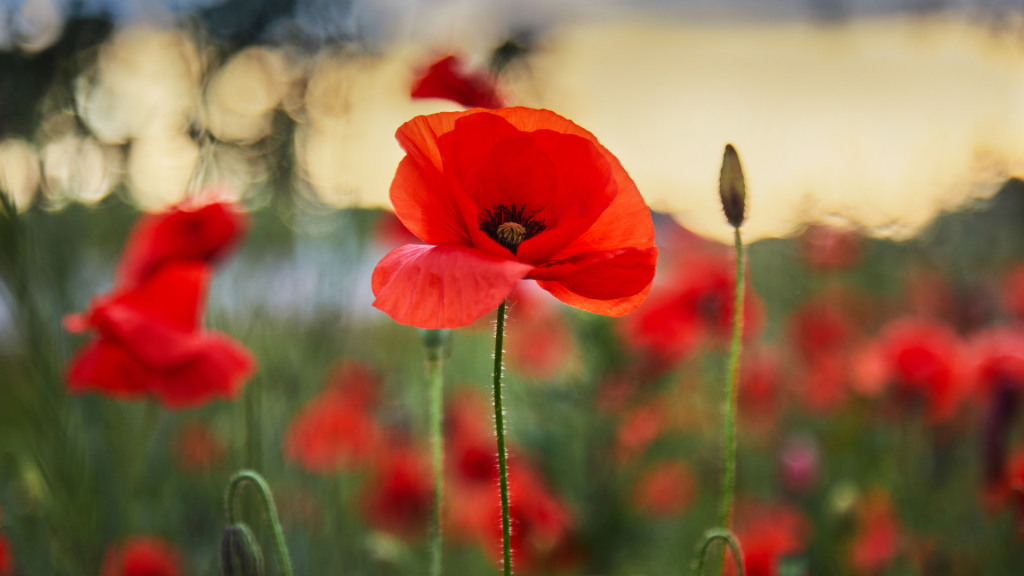
Remembrance honours the fallen who died in war and violent conflict. Pacifism sends a message that it must never happen again.
Pacifists oppose war and violence and in reality so does almost everyone else. It only seems to be a minority (perhaps those motivated by power and money) that seem to want to do it all again.
Some parts of pacifism also interrogate the ideology behind it, like militarism. After all, if nearly everyone agrees that we don’t want a repeat of horrors caused by violent conflict, then we need to understand the reasons for it. Pacifists generally argue that war is not inevitable and that violence is a choice.
That doesn’t mean pacifism is anti-military. In fact, commemorating those who died as a result of war is an important part of the peace movement’s calendar.
Pacifism also encourages us to look back, but not as if war was “the good old days”. Pacifists are realists about what the war involved (the idea that they are utopian fantasists is a common myth) and part of that work is to raise awareness of the cost.
War is never just about battles.
It’s the daily lives disrupted by chaos and terror.
It’s firefighters and other emergency services, that dig out broken bodies from crumpled buildings, while being told to “keep calm and carry on”.
It’s the women who desperately waited for brothers and sons to come home – even though many would not.
It’s the children displaced and separated from their families.
It’s the hunger.
It’s the war-related disease.
And, of course, the death.
So when pacifists reflect at Remembrance, they’re not just honouring those in uniform.
They’re holding in mind all those who suffered the horror imposed upon them, and in their memory recognising that so many sacrificed their future in the belief that, by doing so, we wouldn’t have to endure that horror too.
When you go home, tell them of us and say, For your tomorrow, we gave our today. – John Maxwell Edmonds
Heroes can sit at desks
Work to end the war involved a range of activity behind the scenes.
Operation Overlord was the codename for the Allied campaign often cited as being responsible for the liberation of German-occupied Western Europe in WWII. But it wasn’t just one event; it was a series of careful, strategic decisions that required planning, preparation – and brilliant minds.
Efforts to achieve peace included intelligence gathering, decryption, translation and complex pattern matching much of which we now know happened at Bletchley Park – and often by women. Every day saw the intense work of deciphering codes and interpreting messages.
Winston Churchill used the phrase “the geese that laid the golden egg and never cackled” to describe the brilliant codebreakers at Bletchley Park during WWII. He praised them because their secret work decoding messages that had been intercepted gave Britain a massive advantage, yet they kept absolute silence.
Success also relied on deception, as was the case with Operation Mincemeat, and even enlisting the help of the King in the shape of Operation Fortitude. There is also the formidable story of Noor Inayat Khan, a pacifist who was recruited by the Special Operations Executive (SOE), and whose efforts undoubtably helped pave the way to freedom, without ever taking a life.
So it wasn’t just boots on the ground – who rightly deserve our respect for their incredible bravery – that brought the war to an end. It was those hidden away, who never had to (or chose not to) raise a weapon at a stranger, but still did incredible and important work, and whose names we may never know.
It means nonviolent resistance has a place in our strategic defence and in fact, research now shows it to be twice as effective as violent conflict in overpowering an oppressor.
The point being, people shouldn’t have to die to be called a hero.
We will remember them
Most of us have lived in the shadow of war, even if we’ve never served in one. Millions of people around the world will have close family members, including fathers and grandfathers, who served in the First and Second World Wars (sometimes both), and in conflicts since. We remember them, and their service, at key moments during the year, like D-Day, VE Day and Remembrance Sunday.
On these days we honour their memory and their service, though they are loved all year round.
For those who gave their lives, service wasn’t just about defeating the oppressor. They served because they believed in something bigger: that they were helping to create a kinder, gentler landscape for the future – for us.
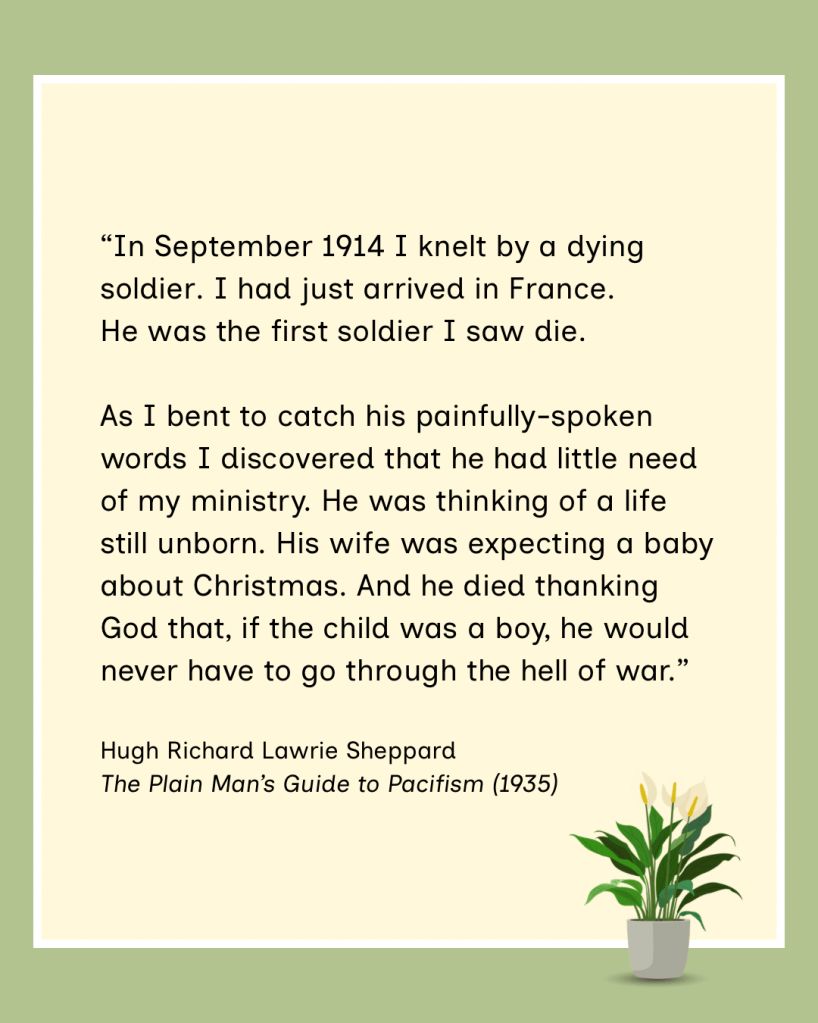
If their lives and sacrifice meant anything – which of course they did – we must stop that horror happening again.
It’s ok to object
Nevertheless, some are still promoting war today, despite saying they respect our fallen while using the same language of hate and harm used to oppress all those years ago.
There are those brandishing the idea that “we just need a good war”, a trope among those who have possibly never served in a conflict zone or done a day’s military service in their life – and probably never will.
We also live in a world where billionaires are building empires on the back of your hard work and contribution, so you can care for the people you love. Meanwhile it seems politicians want to cosplay Winston Churchill and so-called “influencers” push their version of “manliness” for clicks and likes – and profit.
Would you want your loved ones sent to war to hurt a stranger, because one of these guys said so? It’s an important question.
Here’s an answer: It’s ok to object.
Opposing war is not a new thing.
During the World Wars and since, people have opposed engaging in military violence, with some choosing instead to be part of the services that helped literally pick up the pieces. These included ambulance drivers, stretcher bearers and medical orderlies.
This was despite being pejorative labels for their decision not to harm. It’s a worry that anyone would suggest those proposing peace are the problem, but war and violence is not.
To remember is to keep confronting what it costs and what it takes to prevent it from happening again. – Unite Nations Institute for Disarmament Research, on Hiroshima and Nagasaki
In any event, the next time we hold a moment’s silence in memory of those who served, we must remember what so many died for.
That remembrance is also an act of resistance. A call to anyone who thinks “we need a good war” to remember that the fallen gave their lives, so others never have to die that way again.
© The Peace Gap 2026 – All rights reserved. This is an opinion post which may have appeared on other, affiliated websites. For full terms about accessing this content, click here or to find out more about this website click here


You must be logged in to post a comment.